Better late than never. In my defense, some of professional and respected score reviewers just posted their lists in the past few weeks.
Without further ado:
10. CLINT MANSELL (and Pyotr Tchaikovsky) / BLACK SWAN
A fascinating mixture of Tchaikovsky's Swan Lake masterpiece stirred into Clint Mansell's distorted and unsettling sonic manipulations.
Not for everyone but without a doubt one of the most innovative and ballsy scores to be produced in a long time.
9. THEODORE SHAPIRO / DINNER FOR SCHMUCKS
A quirky little gem that is both off-kilter waltzes and Beatles-esque intimacy. It never fails to bring a smile to my face with it's humor and warmth. Shapiro's nailed the comedy genre with his resume of quality scores in the genre.
8. ALEXANDRE DESPLAT / THE GHOST WRITER
Desplat turns on the Herrmann-esque scoring for this twist-filled thriller. Frantic and nerve-wracking at times, Desplat's The Ghost Writer digs deep into a paranoid world that leaves the listener very unsettled.
7. HANS ZIMMER, BLAKE NEELY & GEOFF ZANELLI / THE PACIFIC
A grim and emotionally heavy score that layers on the tonal textures and sonic wallpapers with a subtle grace that never takes the listener out of the era and the world displayed on screen.
While it may not stand up against Michael Kamen's Band Of Brothers masterpiece it certainly gives it a run for it's money.
6. ARMAND AMAR / AO: LE DERNIER NEANDERTRAL
French-Israeli-Moroccan composer Armand Amar borrows from cultures all over the world to produce a powerful dramatic score for the "caveman" film, AO.
With the difficult task of having to compose music for a film with virtually no dialogue, while having to remain in the background yet push the emotions forward, Amar excels in this.
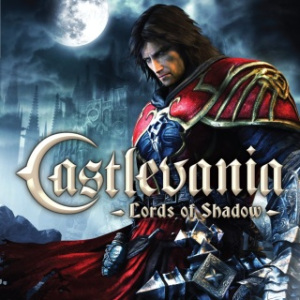
5. OSCAR ARAUJO / CASTLEVANIA: LORDS OF SHADOW
Relatively unknown Spanish composer Oscar Araujo reinvents the Castlevania scores with a choir heavy gothic orchestral score that is simply astounding.
Araujo sets the bar on video game scoring genre a whole lot higher, rivaling Giacchino's Medal Of Honor and John Debney's Lair scores.
4. ARNAU BATALLER / LA HERENCIA VALDERMAR
Another heavy hitter in the "Iberian Revolution" in film scoring, Arnau Bataller sweeps me off my feet with the gothic choral masterpiece. It stands along side Chris Young's best work for horror scoring. A true gem buried underneath a truly horrible film.
3. GARRY SCHYMANN / BIOSHOCK 2
A divine mixture of tonal ambient terror and stark beauty, Garry Schymann steps it up a notch with his second score in the BioShock video game series.
It's a chilling and haunting score that lingers with you long after it's done playing.
2. JOHN POWELL / HOW TO TRAIN YOUR DRAGON
John Powell's perfect score is the best of his entire career. A smooth blend of thematic progression and exciting action pieces, Dragon is perfect coming from all angles.
It will be difficult to top this one...but I suspect he has it in him.
1. NAOKI SATO (& Yasushi Miyagawa) / SPACE BATTLESHIP YAMATO
This score came out of nowhere and knocked me off my feet.
Naoki Sato's "western" action score is simply breathtaking. Throwing in orchestated variations of Hiroshi Miyagawa's original themes with some of his makes for one of 2010's most pleasant surprises.
Showing posts with label Black Swan. Show all posts
Apr 27, 2011
Apr 23, 2011
CLINT MANSELL (and Pyotr Tchaikovsky) / BLACK SWAN
If you went anywhere near a magazine stand, the television or the cinema last year, director Darren Aronofsky’s psychological thriller Black Swan needs no introduction whatsoever.
One of the most anticipated films of 2010, Swan was one of the few films to actually live up to the buzz it generated before it’s release. The film graced us with wonderfully disturbing performances, beautifully shot and choreographed dance scenes, a strong sense of storytelling & direction and of course the much talked about psycho-sexual scene involving co-stars Natalie Portman and Mila Kunis.
Black Swan tells the story of a ballet dancer, Nina (played by Natalie Portman) who is so obsessed with being the best at what she does, she seems to lose focus of who exactly it is she’s trying to impress. With nearly every single scene shadowed with some sort of reflective surface, it gives off a feeling like eyes are always on her, whether it’s her own or an unseen audience only Nina knows. The few scenes that don’t feature a reflective surface are the sparse moments Nina seems to be at peace with herself. Each character in this tale are terrifyingly intimidating in their own way and most scenes are shot in a claustrophobic style, the entire film seems to suffocate you in such an unsettling and effective way, you’re almost glad it’s over, just so you can catch your breath and give some thought to what you’ve just seen.
Aronofsky’s disturbing style of storytelling has always been wonderfully complimented with the music of the former frontman of the alternative/industrial act “Pop Will Eat Itself”, Clint Mansell. After working with Aronofsky on all of his films starting with Pi in 1998, followed by Requiem For A Dream, The Wrestler and many more, Mansell’s made a name for himself in the film scoring business and to a certain degree the pop score industry too, along with John Murphy, Steve Jablonsky and Hans Zimmer. Showcasing his orchestral talents has been something Mansell has never really been able to do, apart from the impressive action score Sahara in 2005. Beyond that, he’s been mostly known to score with a prog-rock, minimalist method that seems to be quite favorable to the average music listener, thus setting him into the pop-score category. Using those same orchestral talents from Sahara, Mansell puts them to good use with Black Swan.
You couldn’t make a film with ‘Swan Lake’ serving as a backdrop and not include Tchaikovsky’s iconic music. What Mansell does here is he cleverly adapts and violently distorts it when the action onscreen deems it necessary. What is unclear for a great deal of the film (and very unsettling) is whether or not the score is what we the viewers are hearing as underscore or what Nina is constantly hearing in her head. The score seems to blur the lines of reality and storytelling with wonderful results. It’s actually very well done and thus Mansell receives top credit for using it in such manner.
By hardly changing a note in the actual "Swan Lake" moments in the score, Mansell manages to orchestrate it in such a way that it retains it’s beauty and easy flow but hints at discomfort and neurosis with some bizarre, yet small changes in the orchestration.
Like Nina, we get lost in the beauty of Tchaikovsky’s Swan Lake and soon forget that we aren’t listening to it, until Mansell attacks us with threatening electronic slashes and crashes, immediately snapping us back into the cruel world that is depicted into the film. The very first thing we hear is “Nina’s Dream” which is a note for note adaptation of Tchaikovsky’s “Introduction” from the first act of his ballet. It doesn’t take long for Mansell to insert some unsettling effects to distract us from the beauty of the music and remind us of it’s not just about "Swan Lake". This cue just touches the edge of the different methods and techniques Mansell uses over the course of the film to engulf us into the insanity of the narrative.
While “Mother Me” doesn’t quote anything directly written by Tchaikovsky, Mansell manages to emulate his compositional style so well it’s almost as if the classical composer is haunting Nina even in the moments of her life that aren’t showcasing the ballet. Mansell uses this in a few cues later on and it works so well blending in with "Swan Lake", most reviewers and listeners didn’t even realize it was Mansell’s original work.
“A New Season” cleverly quotes only the first three notes of the 'Swan Theme' with a brass instrumentation and repeats it like a broken record, sounding somewhat incomplete but works quite well simultaneously.
My favorite cue throughout the entire album is “A New Swan Queen” because of the way Mansell adapted Tchaikovsky’s work and turned into something almost unrecognizable. For the first half he uses a portion of the fourth act in an uplifting manner but quickly changes things over into a rather sinister bit that is incredibly clever. While he does use Tchaikovsky’s music, he only uses the brass section from the first scene of the first act. While in it’s original context it’s quite delightful, here without the fluttery string and woodwinds it comes off as very scary in this version. A haunting descending piano motif comes into play as the percussion lightly taps away like something gnawing into your head. And on film “something” is gnawing into Nina’s head….Mansell uses this as Mother’s theme. Very creepsome.
The terrifyingly erotic “Lose Yourself” and “Opposites Attract” are the only two cues that are pure Mansell compositions, that instantly remind me of his scores for Smokin’ Aces and L’affaire Farewell. Making use of erratic electronic withering and synthetic textures, they serve as the only two scenes in the film where Nina completely forgets about her career and lets loose, only to face horrible consequences.
Mansell showcases his unique ability to shift from the inspirationally stimulating to downright creepy and discordant with ease in just flashes of second in “Night Of Terror”. This cue is what I believe defines Mansell’s score as a schizophrenic musical character in the film. It never really breaks but gives off a steam-rolling tension of ‘ready to snap’ at any given moment and that’s the general terrifying feeling the entire film seems to emit.
The beauty of "Swan Lake" and the grinding madness of Mansell’s Black Swan begin to meld together even more as we come closer to the end with “Stumbled Beginnings”, “It’s My Time” and “A Swan Is Born”. The lines begin to blur and everything becomes so insanely unpredictable that you keep waiting for it to let go and allow you to lose everything.
It all comes to a soaring, sweeping climax with the aptly titled “Perfection”. It’s perhaps the longest passage Mansell uses from the original "Swan Lake". Here he makes a bold, dominating statement with the Swan Theme that’s so magnificent and powerful you can’t wait to stand up and cheer before it’s over and the curtain closes.
While “Perfection” is the high point of the album it just doesn’t feel complete without “A Swan Song (For Nina)”. It sort of withers away and feels like a requiem for your sanity. It’s almost like one final exhale from all the tension that’s built up and slowly let loose as you watch the world fade away. Making use of some beautiful piano playing, it slowly becomes more morbid as Mansell adds in layers of unsettling dissonance, breaking glass (reflective surfaces, perhaps?), scattered cello chords and a very small hint of a dying heartbeat. It eventually envelops into a dark and very depressing closing that fades away in a cello hell that reminds me of Angelo Badalamenti’s darker scores for David Lynch.
In the end it is very apparent that Tchaikovsky’s "Swan Lake" takes center stage with this film but Mansell comes in every now and then and shatters the flow with such precision and violence it becomes a whole new monster of it’s own name.
It’s a shame, because of the use of non-original material, Black Swan was not eligible for awards and therefore Mansell remained empty-handed for one of his most innovative works to date. Of course, working in the business for so long, he would have realized that before he started and he still poured his heart and soul into this and that is good enough. It proves he’s not in it for the business but the music.
Clint Mansell created one of the most effective scores of 2010 and possibly one of the most controversial as well. Classical enthusiasts shunned it for messing with a classic and score enthusiasts shunned it for being too much like Tchaikovsky….I reward it with praise for having the balls to approach such a project.
4 **** out of 5
Jan 2, 2011
BLACK SWAN (Dir. Darren Aronofsky. 2010.)
Thomas Leroy (Vincent Cassel) needs a passionate and beguiling ballerina to play the lead in his newest Swan Lake adaptation. His former “Little Princess” is out of the running and some new blood is needed. Enter Nina Sayers (Natalie Portman) whose virginal qualities make her a perfect fit for the fragile White Swan. However the production demands that the White Swan also become the troubled Black Swan and Nina has a problem embracing (or releasing) that part of herself. She is required by Thomas to exhibit a lack of control that is at odds with her upbringing and is forced to make a decision that will have consequences not only for her but for those individuals that get caught up the maelstrom that surrounds her. To complicate matters further the rivalry that such a prime position invariably brings is not so black and white itself.
Nina is a difficult protagonist to identify with; if we look at her objectively we see an introverted two dimensional cliché so from the very beginning we are required to either accept this as a plot device or paint everything that follows with the same brush strokes. I chose to accept it because I had faith in Aronofsky’s ability to give with one hand and subversively turn things around with the other without warning. Having said that and after letting the film do its work, Natalie Portman, looking every bit the ballerina, gives what I think is her best ever performance. She is perfect for the role of Nina and even if, like me, you’ve never really been impressed with her career choices since playing the young Mathilda in Luc Besson’s Leon (1994) there is much to admire in her presentation here. I’m no ballet aficionado and a professional may well disagree but I felt her dancing was extremely convincing and I didn’t doubt for a second that she could do the same off camera if asked. Careful editing undoubtedly helped sustain the momentum but I can’t fault her vivacity. The dance characterises her more than her actions elsewhere. It’s only while dancing that she transcends the two dimensional.
The director manages to blend the cinéma vérité style that won him recognition in The Wrestler (2008) with the chaotic and unsettling imagery he freaked us all out with in Requiem for a Dream (2000), and he does it almost perfectly. I say almost, as the pacing is a little awkward at times, particularly in the first third of the film. It seems as if he is purposefully holding something back, or is he giving us just enough hints that something is awry? That’s for the individual to decide. Either way, this duality beautifully mirrors the text and the subtext of the film.
Aronofsky has a breathtaking ability to place his camera on a subject and have them become the centre of a crippling duality. In the aforementioned The Wrestler we spent a great deal of time behind Mickey Rourke’s character, following passively as he drifted from place to place. Similarly in Black Swan we follow Nina from a vantage point, closer than with Rourke, placed just behind her shoulder, she fills the frame and the world around her blurs into insignificance.
Then the camera will abruptly shift its point of view and through precise timing this flipped perspective puts the subject at odds with their surroundings, lost in a sea of increasing dementia and unease. Nina again fills the frame but the advantageous position she had in her own private view of the world is now fractured. It’s a wonderful technique that he relies on a little too often; nevertheless it has the desired effect on the viewer and along with his quick edit has become his signature move. Look back through Aronofsky’s career and you will see it time and again.
The director uses space masterfully. The tightly controlled home life which Nina shares with her overbearing mother is claustrophobic and the camera is given less freedom to explore whereas the open stage, a microcosm of the real world and for Nina the only one that really matters, is free and fluid and the camera flies elegantly around the energetic dance as effortlessly as if it were carried on the breeze of Nina’s pirouette. We rarely see the audience or even care if they are enjoying the performance but they may as well not be there anyhow, Nina is the centre of her own universe in those times and that universe is spiralling out of control.
Take a moment to applaud the camera operator during those scenes as he/she does an outstanding job. Praise should also be heaped on Mila Kunis who gives a fine performance as a colleague of Nina, and the multilingual Vincent Cassel who never fails to impress whatever the role demands of him.
Aronofsky achieved auteur status long before Black Swan but he’s neither too arrogant nor ashamed to openly reference his influences. He is channelling not just the obvious influences (Michael Powell and Emeric Pressburger) but look a little deeper beneath the fractured surface and there is a lot of Polanski onscreen, or rather, at the edges of the screen, in the dark corners, behind the dressing room doors and in the mirrors that seem to be everywhere.
Music is again by Clint Mansell (their fifth collaboration) and is deceptively complex. His reworking of Tchaikovsky's original composition locks with the visuals beautifully not only during the ballet scenes where it conveys an urgency and grace simultaneously but off-stage when an ominous and portentous sensation is requisite. Aside from the famous “Swan Theme” I’m not familiar with Tchaikovsky's composition so I was mostly unable to tell if the original had been changed by Mansell or built upon or simply played differently but for me that wasn’t essential, it was the feelings conveyed and the gravitas they lent the scene and those qualities were abundant. Parts of it would not be out of place in an Argento horror film.
Another essential Aronofsky film. Seek it out and engage with its duplicitous beauty. Or be left cold from the onset and wonder what all the fuss is about. View the trailer here.
For me, it’s a ...
**** out of 5
For further interest see Cuckoo77's review of Black Swan's score via this link.
Labels:
Black Swan,
Clint Mansell,
Darren Aronofsky,
Film
Subscribe to:
Posts (Atom)